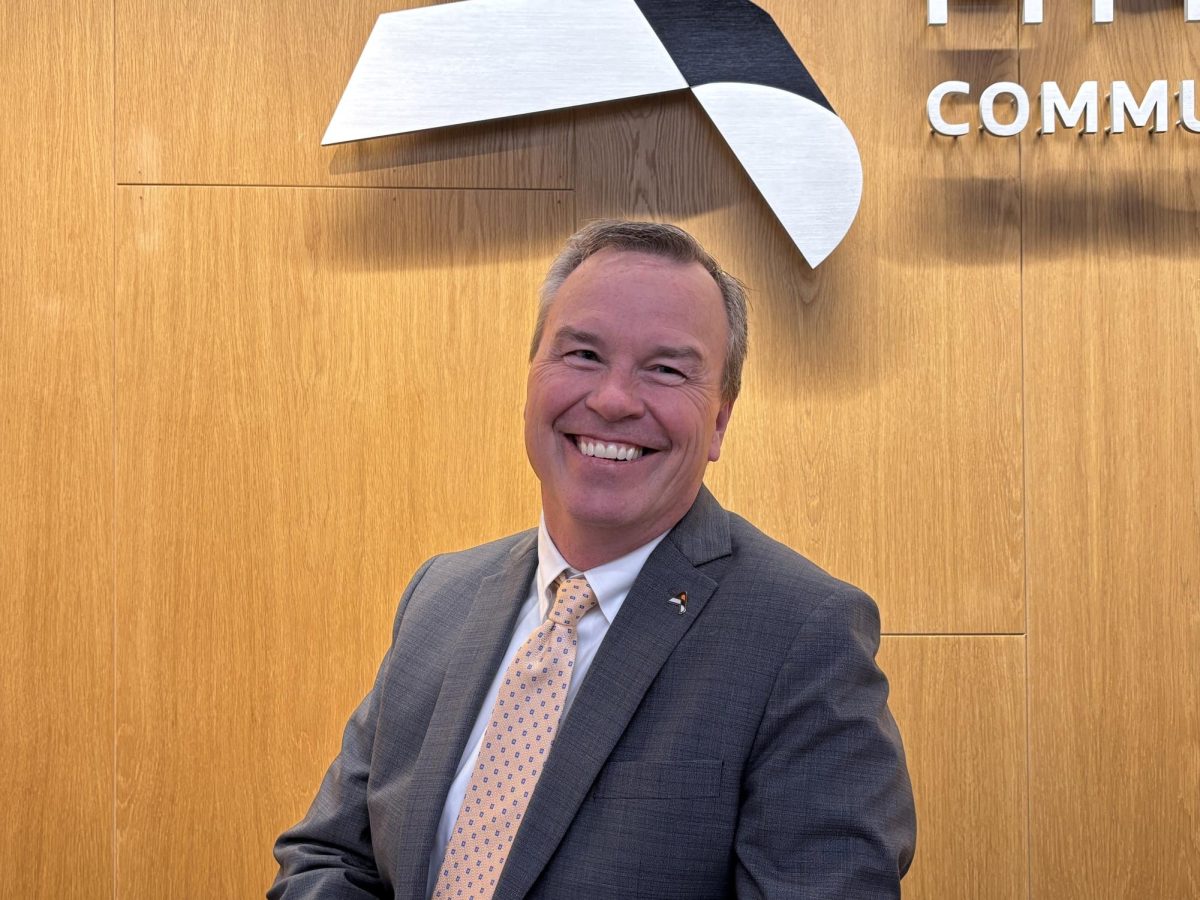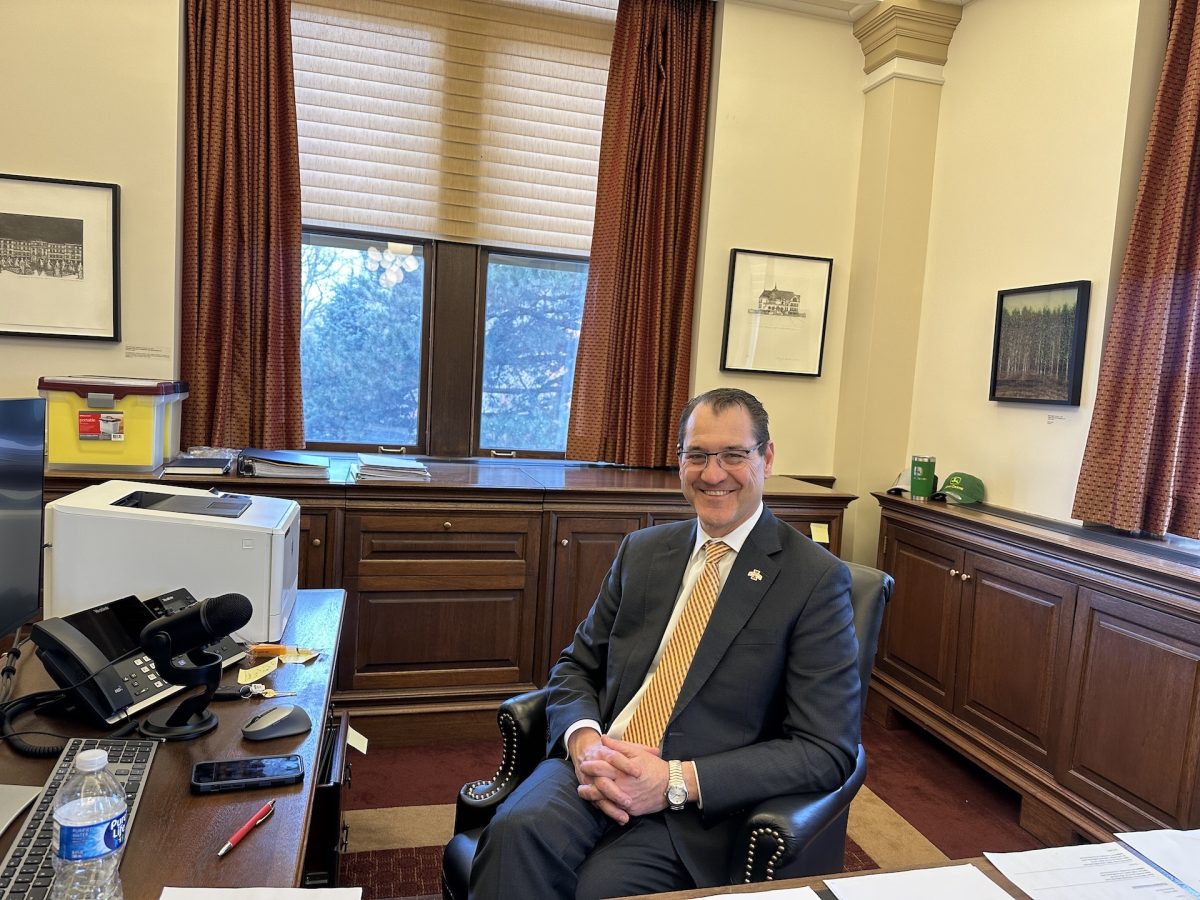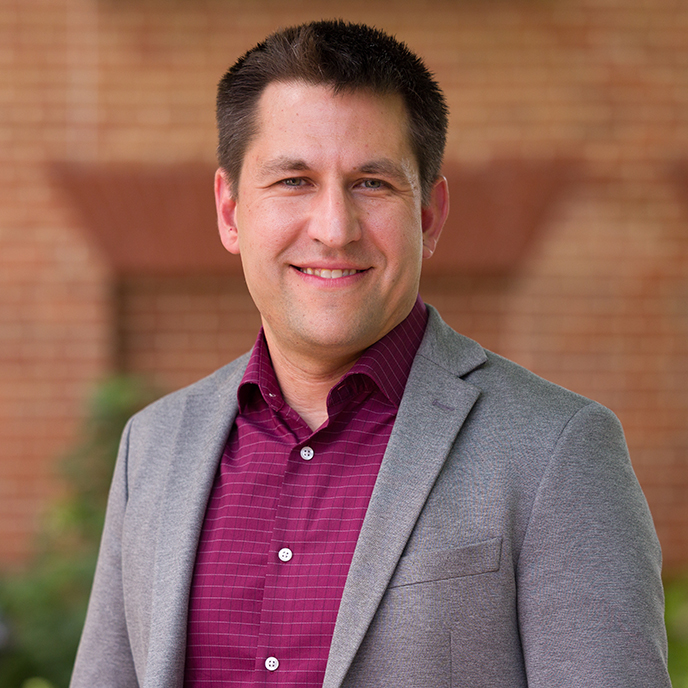

For David Cook, a successful university president starts with a strong team and a shared goal of servant leadership.
Cook, the second of two finalists who visited Ames this week as part of the search process for Iowa State University’s next president, spoke at an open forum on Thursday where students, faculty, staff and community members could ask questions and get to know him ahead of next week’s expected presidential selection.
Cook, who has served as president of North Dakota State University since May 2022, spoke about his experiences in higher education and visions for Iowa State.
“It’s a joy to be back,” Cook said, introducing himself. “And a joy for me to be back home.”
A feedback form is available for anonymous comments and feedback for each finalist, Cook and Benjamin Houlton, the dean of the College of Agriculture and Life Sciences at Cornell University in Ithaca, New York. Submissions close at 5 p.m. Friday.
Videos of the candidates’ open forums are available at the Iowa Board of Regents YouTube page.
Cook: ‘Servant Leadership’ starts with a strong team
A presentation titled “Navigating Change Through Servant Leadership” teed Cook up to talk about his experiences and how they got him where he is today as the NDSU president.
“Any success you’re going to have as a president starts with a strong team,” Cook said. “We’ve moved the needle on a lot of students’ success metrics, and had to do a lot of hard change … I do not even remotely think what I walked into is similar to what’s happening here [at Iowa State] in so many, many ways, so don’t be nervous about that by any means, sincerely.”
Cook recalled securing funding for two buildings at NDSU, saying it wasn’t him, “that was a whole team that put that all together,” and that it tells a story about servant leadership.
When reworking a failing engineering building, “My role, along with others, was to really think about the vision, because we weren’t selling the vision… it’s not about the building, it’s about what you do in the building, it’s about what you do for the students, it’s about how faculty can lean into that.”
Cook underscored his preparation for the role of being Iowa State’s next president: this role is the only one he’d consider leaving where he is now. His experiences at prior institutions, his alignment with the land-grant mission, and most importantly serving as a university president, has prepared him to come back home in a new way.
“I’ve always loved Iowa State, I think it’s scrappy — if I can say that — I just love how it punches above its weight every day, and I want to be part of that,” he said.
Cook continued his presentation talking about where he sees Iowa State going and how he will serve as a president that will lead change in three steps:
- Respect the land-grant mission and ISU’s success
- Engage and listen to all stakeholders (students, areas of excellence, and external stakeholders)
- Understand the higher education landscape
This leads to a “shared vision, grounded in ethical, principled leadership,” according to the slides he presented.
“We’ve got to have our graduates better prepared,” he said while talking about the land-grant mission. “They’ve got to learn how to write, they’ve got to learn how to communicate, they have to work in teams, they have to have critical thinking skills. Those are all hallmarks of a liberal arts education, so we can’t forget that.”
Cook continued to say it’s important to understand the state and its people — and Iowa State is moving in the right direction with its strategic plans to do so.
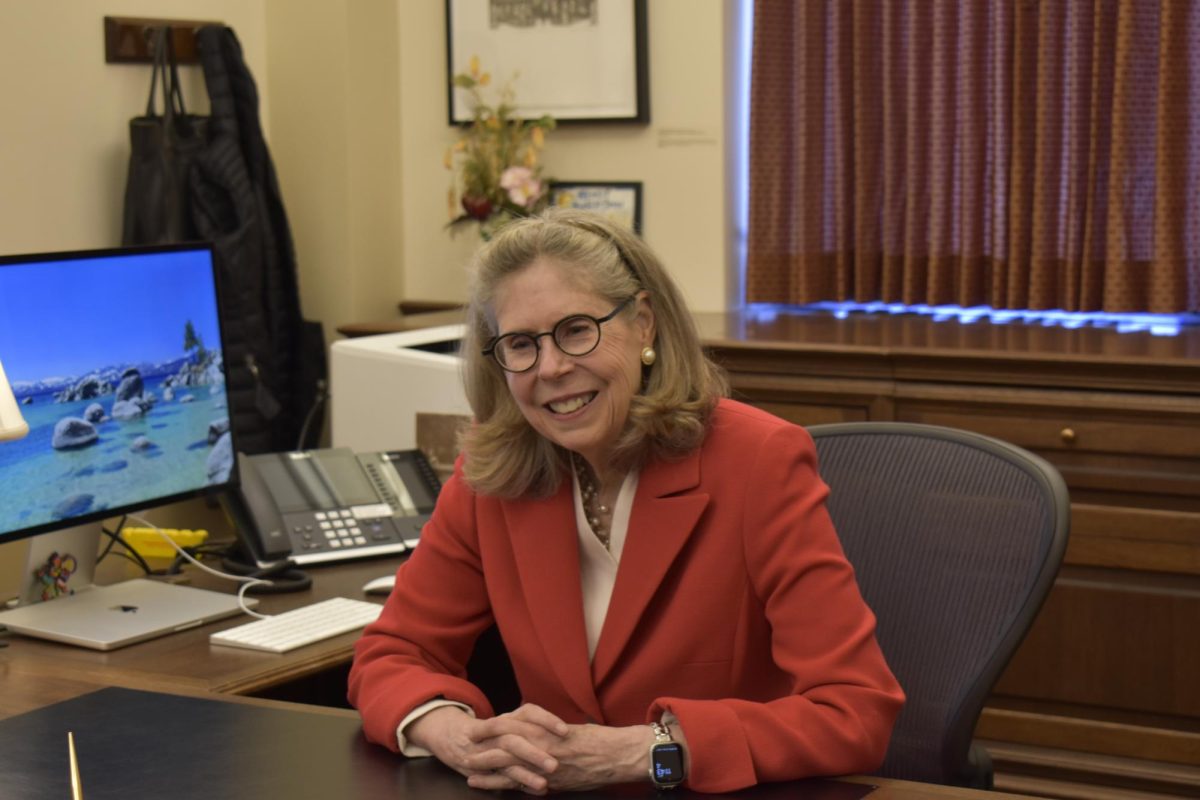
“My plan isn’t to come here and reinvent the wheel,” he said. “It’s to build on President Wintersteen’s incredible legacy and foundation to make anything I can do maybe a little bit better.”
Who is David Cook?
David Cook might be coming back to where it all started: He earned his bachelor’s degree in political science and speech communication from Iowa State in 1992.
“I grew up [in Ames],” Cook said. “Like I said, this is home. I was born at Mary Greeley, went to Ames High and graduated from Iowa State.”
He went on to earn his master’s and doctoral degrees in organizational communication, both from the University of Kansas.
In his three years as NDSU president, Cook has overseen 11 colleges in the university system and increased enrollment numbers, student retention and graduation rates. He also increased research funding and revenue as well as secured funding for facilities and new degrees.
“I really genuinely believed that I had a great resumé to know how to be a president,” he said. “And I was wrong. Because it’s a huge, big leap. Even though I thought I knew, I didn’t know … so I jumped in, and took the president’s role … a couple years later, I’ve been having a ball, but don’t be fooled, these are big, different kind of jobs, and everybody thinks they know until they get thrown in the hot seat.”
He also serves as a professor in the College of Health and Human Sciences at NDSU.
Previously, he held chancellor positions at the University of Kansas and the University of Kansas Medical Center as well as various administrative roles at the latter. He was with KU from 2013 until 2022.
Cook also served as a full professor of communications studies at KU and served several years as an adjunct and assistant professor within KU and the KU Medical Center. He also has long lists of published research articles and grants. He sits on numerous institutional and regional boards and committees.
See Cook’s full curriculum vitae.
Cook answers questions from audience
Students, faculty, staff and community members had the chance to ask Cook questions after his presentation.
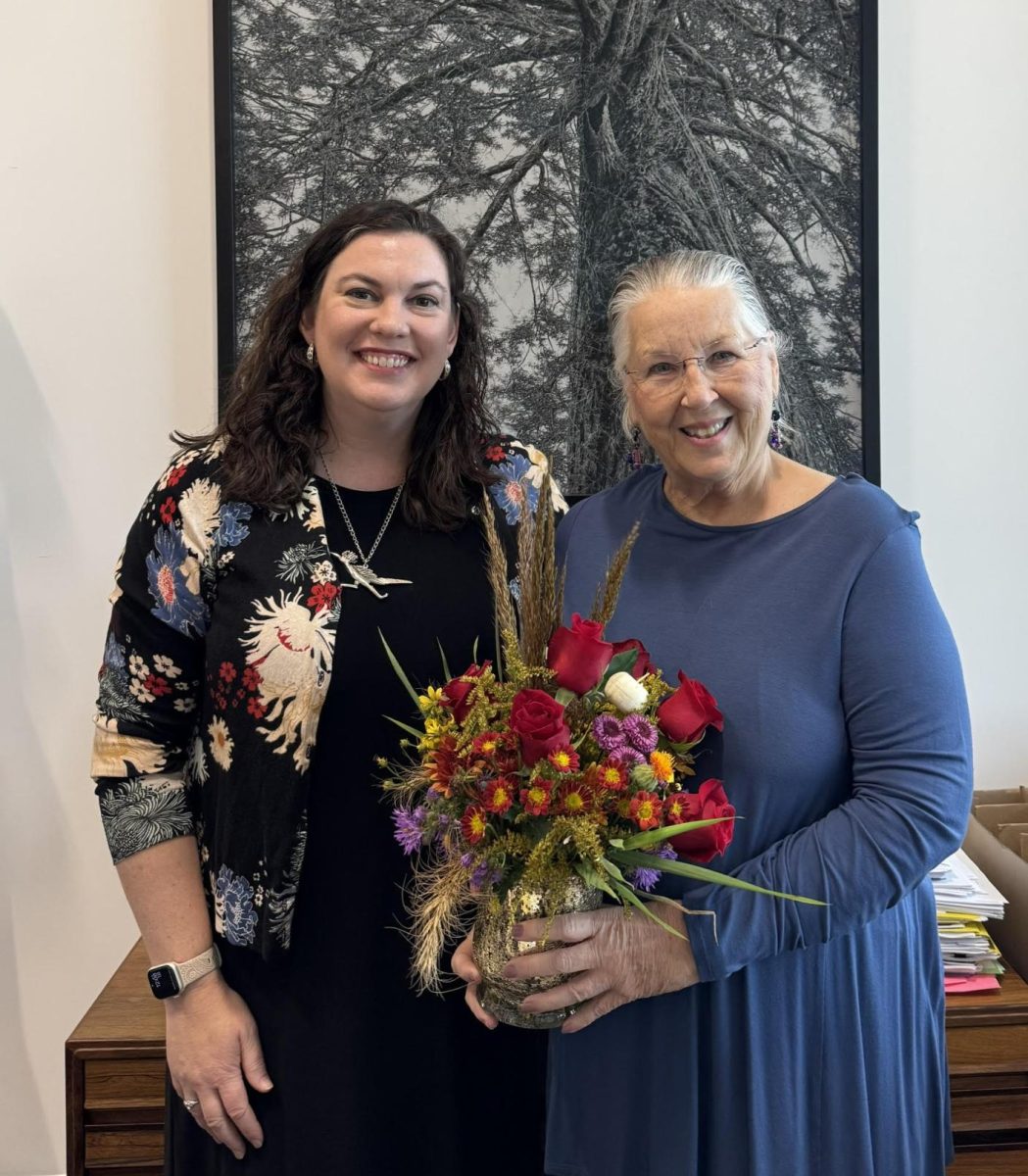
Kelly Winfrey, associate professor of journalism and mass communication and Ames School Board president, asked a question on behalf of Karen Kedrowski, director of the Carrie Chapman Catt Center for Women and Politics, co-director of the Center for Cyclone Civics, and professor of political science:
“In your opinion, what is the role of higher education in supporting and strengthening American democracy?”
“We are just perfectly situated with extension offices in every county to engage in civil discourse about important issues,” he said. “That doesn’t mean that we’re proactively pushing a particular agenda, but we’re bringing people together. Now more than ever, that’s the role of higher ed.”