This series of public land profiles seeks to highlight the cool places where you can spend time in the outdoors in Story County. To learn more, visit Story County Conservation at McFarland Park or go to the Story County Conservation website.
Just northeast of Ames at the intersection of North Dayton Avenue and County Highway E29 — 2480 East 190th Street — is a small, 7.4-acre piece of Story County Conservation property that has more to offer than you might expect. In the past this piece was part of a larger property that was used to graze cattle. Wakefield Woods was donated to SCC by John and Anne Wakefield in 1988.
The Wakefields were the grandparents of one of my daughter’s close high school friends, Rachel Wakefield. She has fond memories of exploring and playing at Wakefield Woods as a child with her sisters and cousins. Now the public has the same opportunity.

Ecology and flora
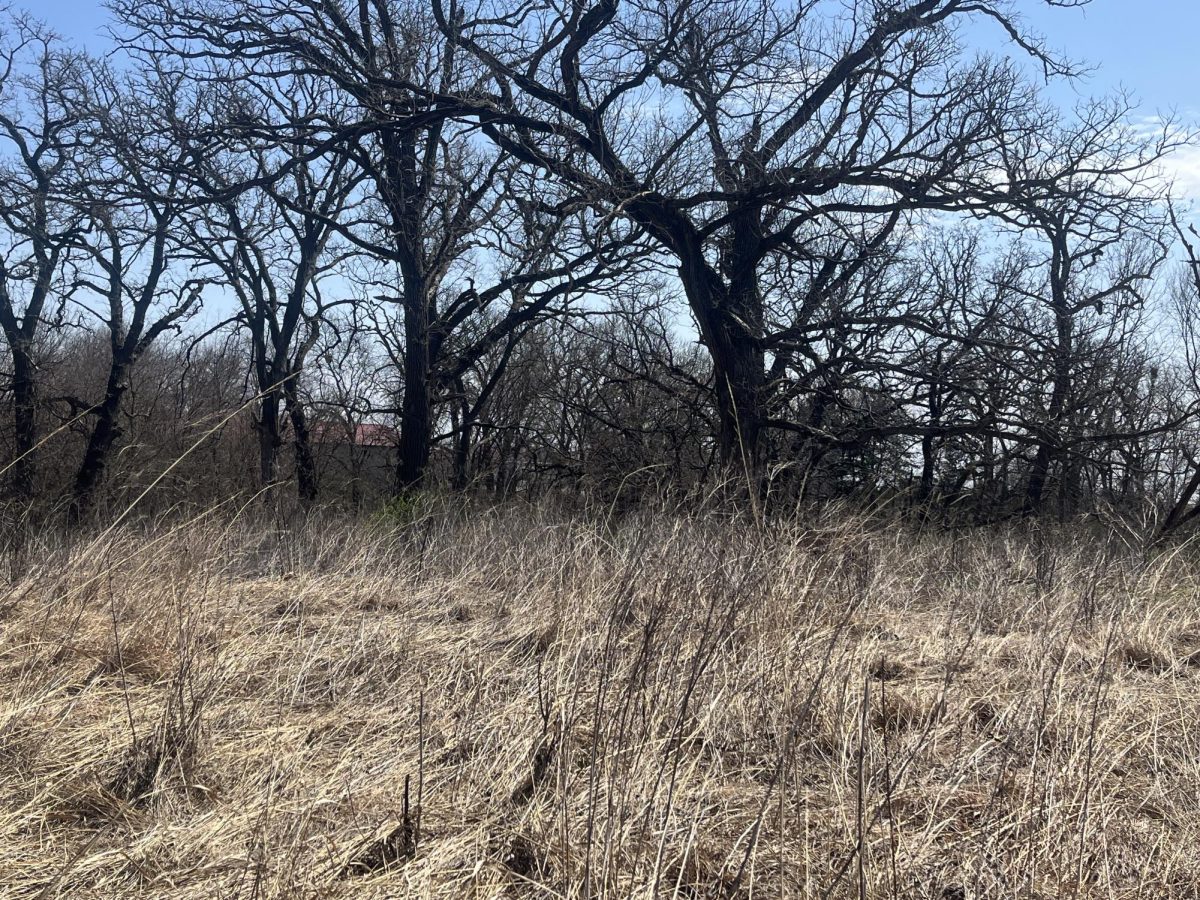
Wakefield Woods stands out because of the presence of large, impressive and old bur oaks surrounding a tallgrass prairie reconstruction. Iowa is well known for having vast areas of tallgrass prairie at the time of European settlement. Today only about 0.1% of that original prairie remains. Iowa also had large tracts of old growth deciduous forest in the eastern portions of the state. Although there are forested areas in parts of Iowa, almost none of that forest is never logged “old growth forest.” What’s less well known is that substantial parts of Iowa were “oak savanna” when European settlers arrived.
Oak savannas occurred in the transitional areas between deciduous forest and prairie and were an important habitat for many species. Iowa’s native wild turkeys likely made extensive use of oak savannas as roosting sites and for feeding on acorns. Oak savannas were characterized by having tallgrass prairie species — big bluestem grass, purple cone flower, etc. — with scattered bur oak and shagbark hickory trees. These open, park-like, areas were maintained by frequent fire, and intermittent grazing by bison and elk.
The trees that were present were the “lucky ones” — seedlings that sprouted in wet years when the bison did not pass through and saplings big enough to survive the first time a fire burned. Once mature, neither fire nor herbivore could threaten the tree, which could live through hundreds of cold winters and hot, dry summers.
The scattered trees made it relatively easy to exploit oak savannas for agriculture and pasture. It is estimated that only about 0.02% of Iowa’s original oak savanna remains due to conversion to agricultural use, fire suppression, overgrazing by cattle and the presence of non-native invasive species. Christiansen Preserve is another Story County property with on-going oak savanna restoration.
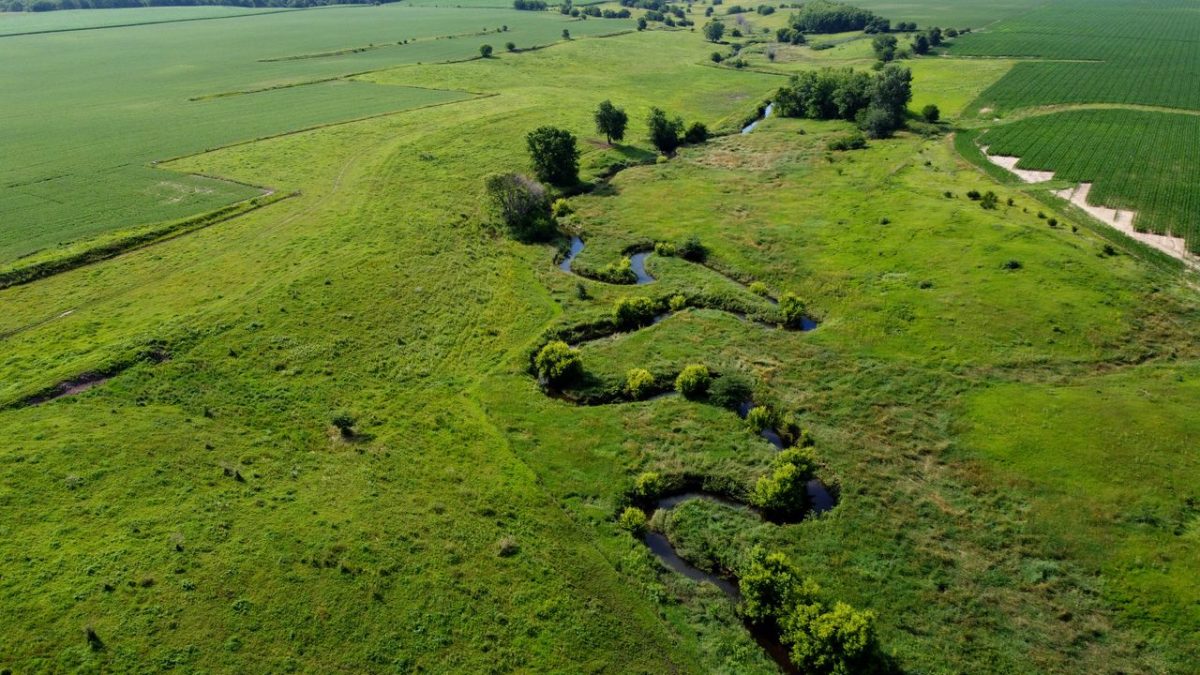
Wakefield provides a clear view of central Iowa’s woodlands — both past and present. The upper portion is a tiny snapshot of what a central Iowa oak savanna woodland would have looked like to European settlers. Large mature bur oaks and shagbark hickory trees interwoven with tallgrass prairie. The valley with an intermittent stream in the southeastern portion of the park shows the “present” of many Iowa woodlands. Fire suppression and introduction of non-native species has resulted in much less open Iowa woodlands with thick understories of invasive species.


Animals
Although small, Wakefield Woods provides home, shelter, and food for a range of mammals and various bird species. During the spring migration warbler species such as yellow-rumped warblers might be seen here. Bluebird nest boxes are maintained at Wakefield Woods and eastern bluebirds are commonly seen The muddy banks along the stream reveal the passing of white-tailed deer and raccoons. Other mammals, such as white-footed deer mice leave little evidence of their presence, but are there all the same.
Nature walk
There is a short, mowed trail around the periphery of the reconstructed prairie. In some spots your mind’s eye can see large expanses of oak savanna with grazing herds of bison and elk as you’re walking along. Don’t forget to look down once in while too. You might see some moss growing on a log.

Other activities
Wakefield Woods has a picnic table that would make for a great spot to enjoy a summer meal with family. There is also a nice bench along the trail suitable for pondering the mysteries of life and the sad fate of 99.98% of Iowa’s oak savanna. The wooded valley in the southern portion would be a great place for young humans to experience the “wilderness” without any of the dangers associated with “real” wilderness. There’s little chance of getting lost, but lots of opportunity to solve navigational issues and to get wet and muddy.
—Jim Colbert is an avid outdoorsman, member of the Story County Conservation board of directors and retired biology professor at Iowa State University. You can also follow him on Substack.