As a boy, Joel Sartore read about passenger pigeons, a once common North American bird that likely numbered in the billions but was purposely hunted to the point of extinction by 1914. He had a difficult time fathoming why people allowed such a thing to happen to the pigeon.
More than five decades later, Sartore, now a photographer for National Geographic and founder of the Photo Ark, is even farther from any comprehension.
“In fact, my understanding of that grows less with each year. I don’t understand why people don’t care,” he said. “The world would be so much better if we were a little bit kind and tolerant and thoughtful about nature especially.”
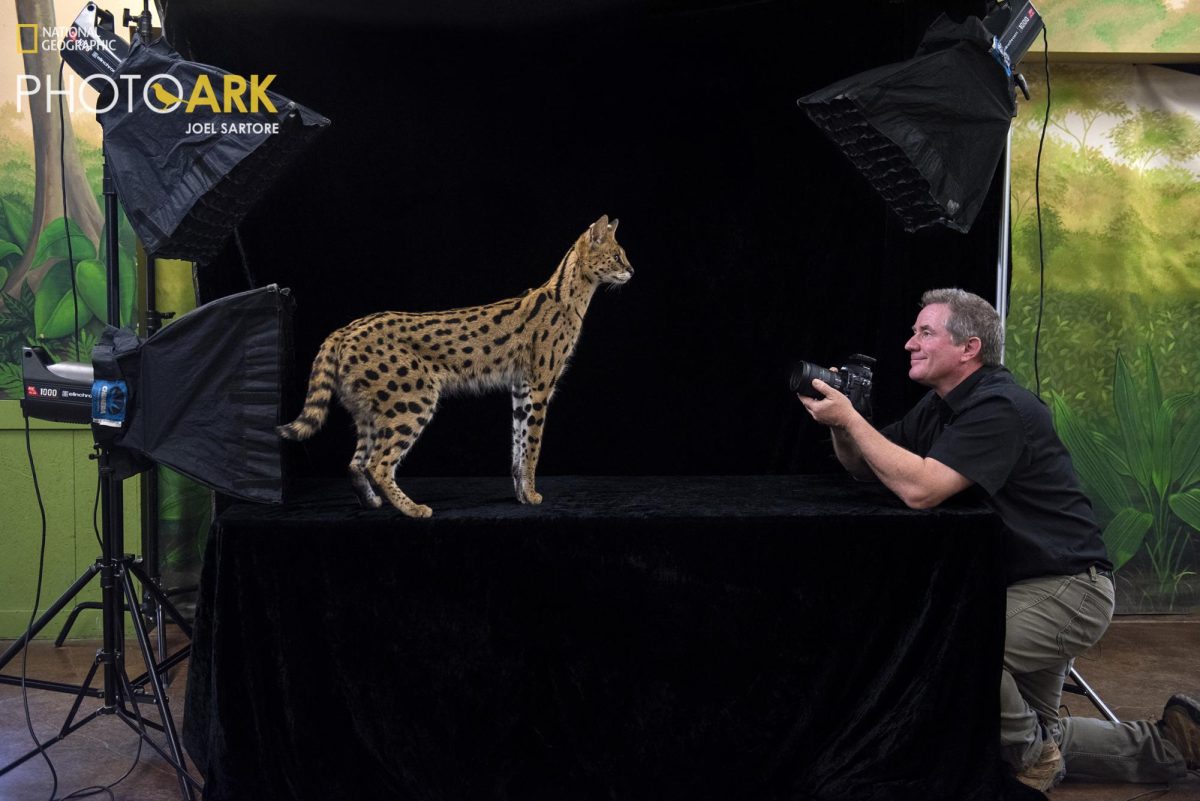
For the past 20 years, Sartore led the Photo Ark, a National Geographic project that aims to photograph all species living in zoos and wildlife sanctuaries. The work took him all over the world, photographing thousands of animals of every size.
Satore, a Nebraska native, will speak about his career and Photo Ark work at 6 p.m. Thursday in the Sun Room in the Memorial Union.
Placing all creatures great and small on a level playing field
Satore’s wife, Kathy, was diagnosed with breast cancer in 2005. With three young kids, he had to stay home for a year — a major change from his lengthy travels around the globe for National Geographic. The home time led him to the realization that much of local nature — like minnows, toads and sparrows — receives little visibility.
“Small animals that can fit in the palm of your hand — which represents most animal forms on Earth — were never going to get recognized,” he said. “Even if they were on the brink of extinction, nobody would even know they existed.”
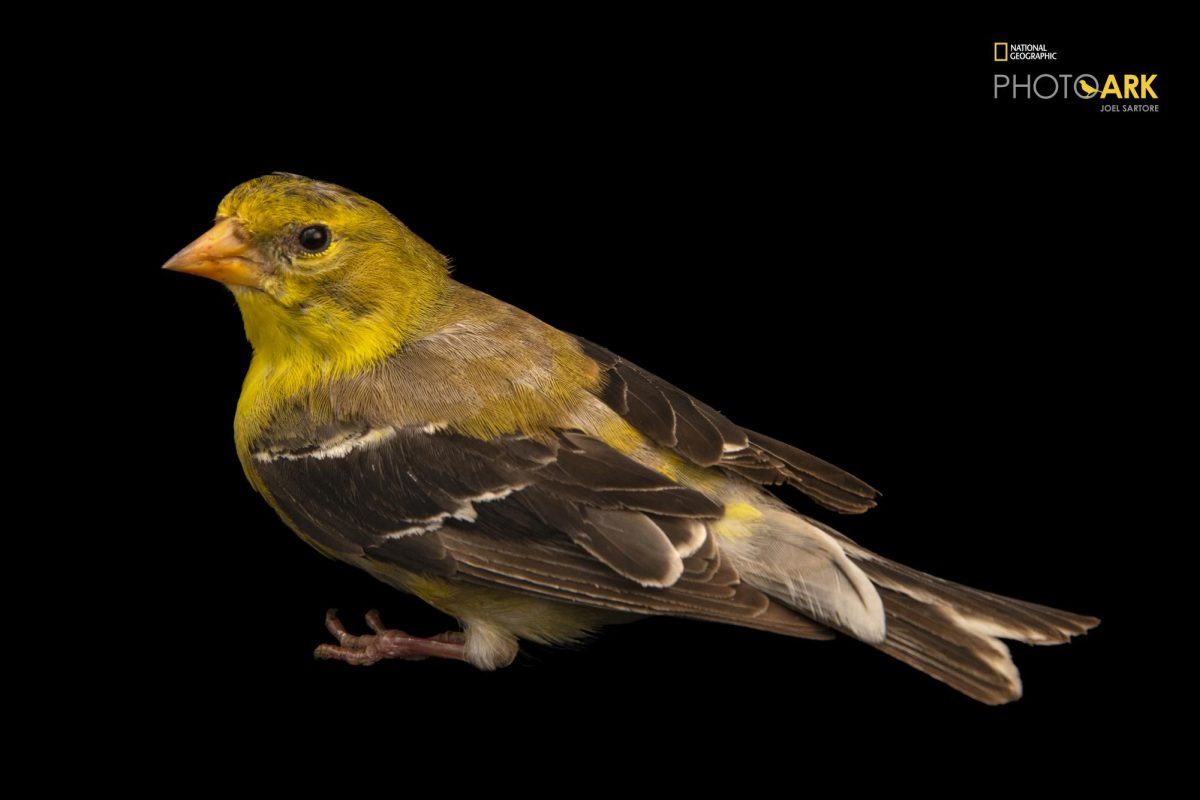
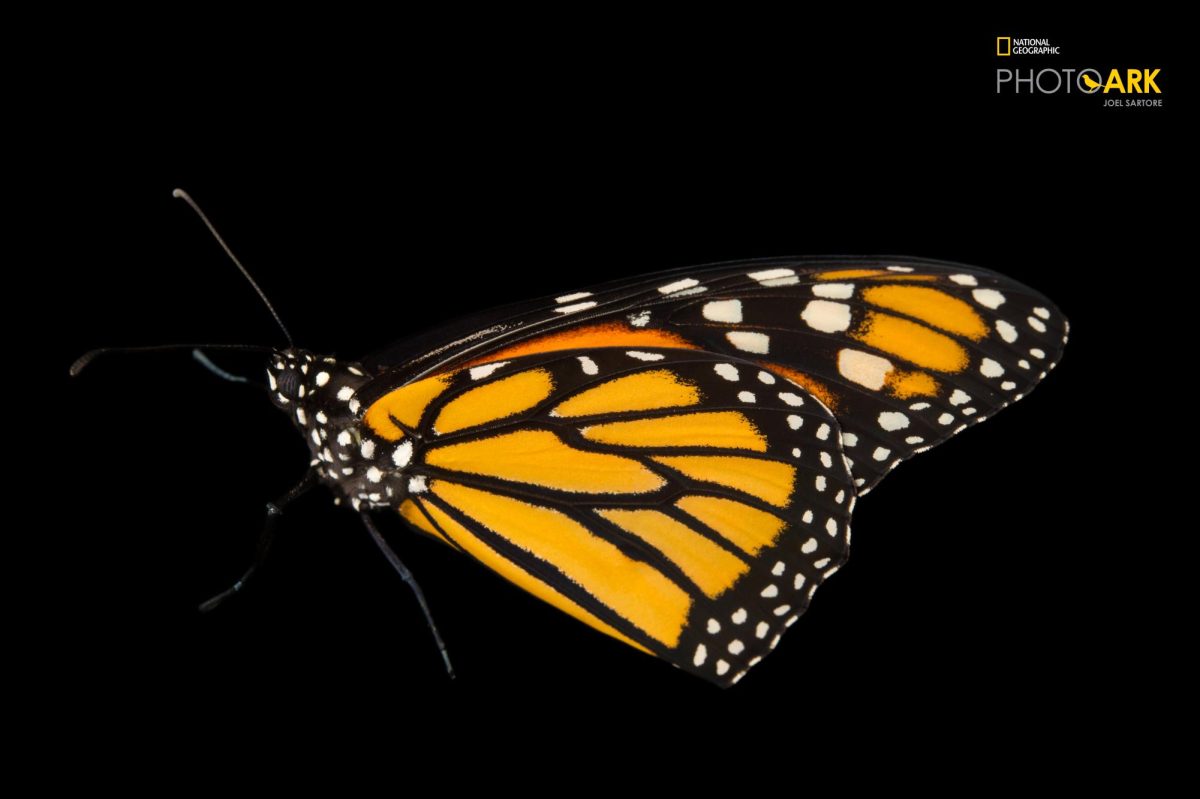
The Photo Ark puts all animals on a plain black or white background. There’s no size comparison, so no creature stands taller than another.

The earliest photos were of animals at the Lincoln Children’s Zoo — less than a mile from Sartore’s home — with the first entry being a naked mole rat. As his wife began to recover, he traveled to zoos in Omaha, Sioux Falls and Des Moines, and later took overnight trips to places like Denver and Dallas. When he went back on assignment for National Geographic, The Photo Ark remained a side project.
“I just thought of it mainly as a stock photography project that would draw attention to animals and hopefully get people to care,” he said.
After about 10 years, National Geographic gave grant funding to the project. A three-part PBS series (Rare: Creatures of the Photo Ark) followed as did several media appearances, including Fresh Air and 60 Minutes.
This year is the Photo Ark’s 20th, and a few weeks ago, during a 25-day tour of several cities in Australia, Sartore photographed the project’s 18,000th species — the critically endangered red handfish. The most recent additions aren’t available yet. The Ark’s tally is more than 17,800 ready to be explored.
Inspiring others to action
Sartore is optimistic for the future. The Endangered Species Act is “basically a Bill of Rights for other living things,” and the creation of parks and preserves has done a really good job, compared to the rest of the world, he said.
“We take them for granted because we grew up going to these parks, but it’s a really big deal to have those,” he said.
His travels exposed him to all types of people who are fighting the odds and trying to get people to be aware of problems and how to fix them. In Iowa, he points to Iowa Bird Rehabilitation, a Des Moines nonprofit run by Jenni Boonjakuakul, whose goal is to recover, rehabilitate and release orphaned and injured wild birds.
He asks others: “What do you love that will make the world a better place?”
That could be the environment, solving food insecurity or reducing plastic waste. Sartore wants people to become an expert on something they care about and stick with it, becoming an advocate and educator.
There are threatened species in Iowa like the the Iowa Pleistoscene snail, Indiana bat, greater prairie chicken or Topeka shiner that could always use more public support.
“We are losing species at a greater rate than ever before,” he said. “We need action.”
Everyday assistance for bettering nature
Small changes could make a big difference if more people engaged in them, Sartore emphasized, such as planting milkweed for monarch butterflies. It’s the sole plant where the butterfly lays its eggs, and the drop in milkweed is one of the reasons the species is likely headed for extinction.
“It’s not complicated,” he said. “If we can’t save that or don’t want to save that, are we going to save anything else?”
Some native prairie, nectar bearing plants and milkweed would go a long way as insect populations decline, Sartore said, whether it’s in someone’s yard, public parks or along roadways.
“It’s a really good feeling to see butterflies and birds in your backyard because you created a space for them.”
Future of the Photo Ark
Future destinations for Photo Ark additions include Western Europe in April and South America in May. But short trips across the U.S. are common for Sartore as people often reach out to let him know they have a missing Ark species he could photograph.
What is his favorite animal? “I always say the next one is my favorite,” he said. “I’m always totally excited for it whether it’s a starfish or an elephant.”
Even at 18,000 species, there are still more yet to be found and photographed. Some species high on Sartore’s personal wishlist include several warblers and other songbirds as well as small freshwater fish, a large number of which exist in the Midwest with little fanfare. There’s also the Javan rhinoceros, Tonkin snub-nosed monkey and the saola, an Asian bovid which may be extinct.
The current goal for the Photo Ark is 25,000 species. While Sartore is still up for anything, he acknowledges that he probably won’t be there to cross the finish line. It’ll be his son, Cole, who’s been working alongside him for many years.