Ames civic leaders did a lot of listening on Tuesday and one thing was clear: an overwhelming majority of residents at the special meeting opposed a proposed data center.
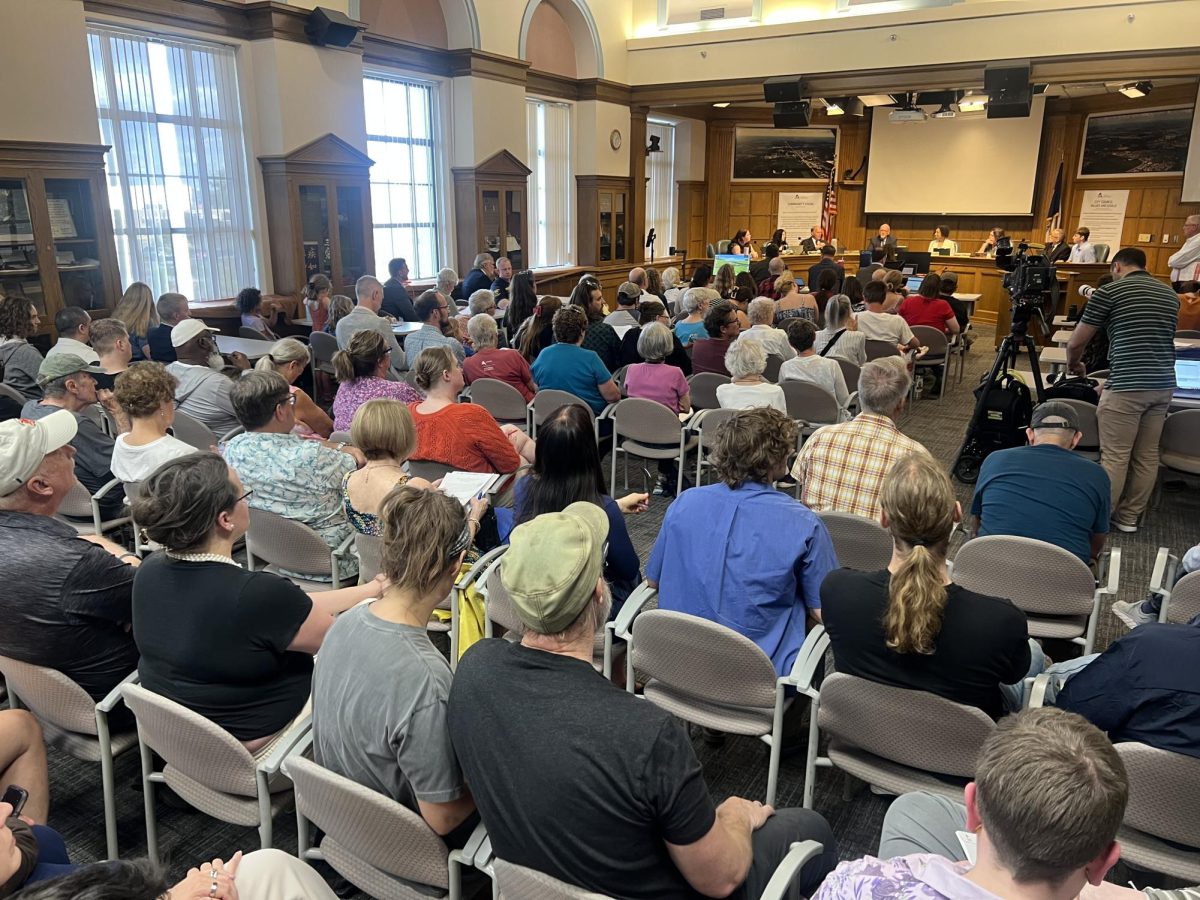
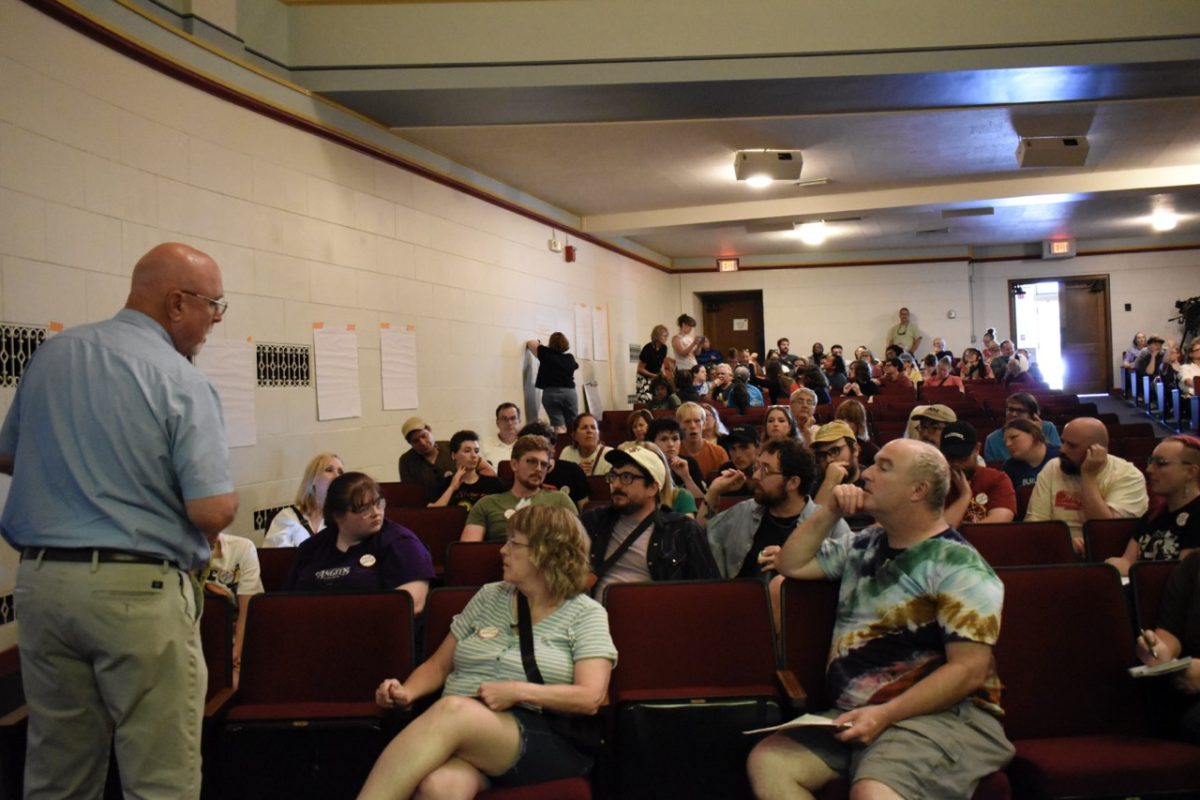
Residents who converged on the Ames City Auditorium for a city council listening session filled nearly every seat on the ground floor, with some standing against the walls and outside the doors. Many wore “No Data Center” pins and carried pamphlets with a similar message.
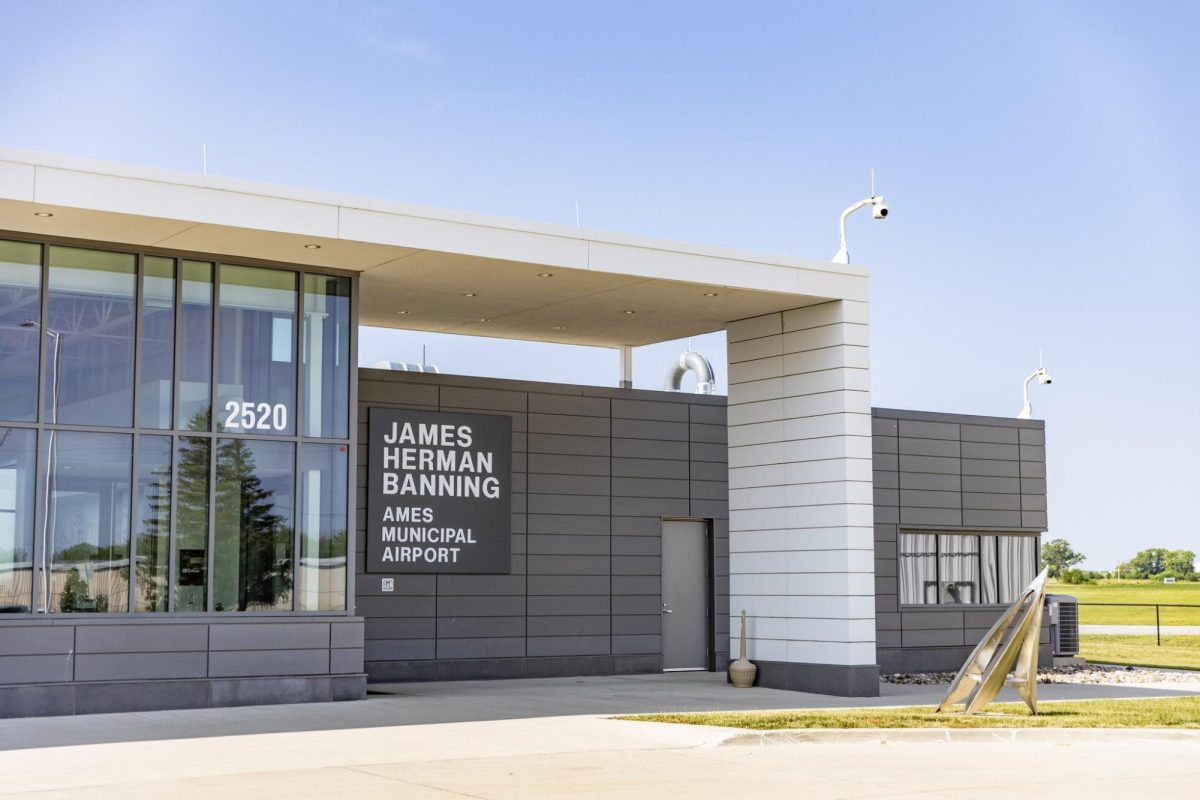
The listening session came after the public was informed of Des Moines company Lightedge’s proposal to build a data center near the municipal airport. Company representatives spoke at last week’s city council meeting.
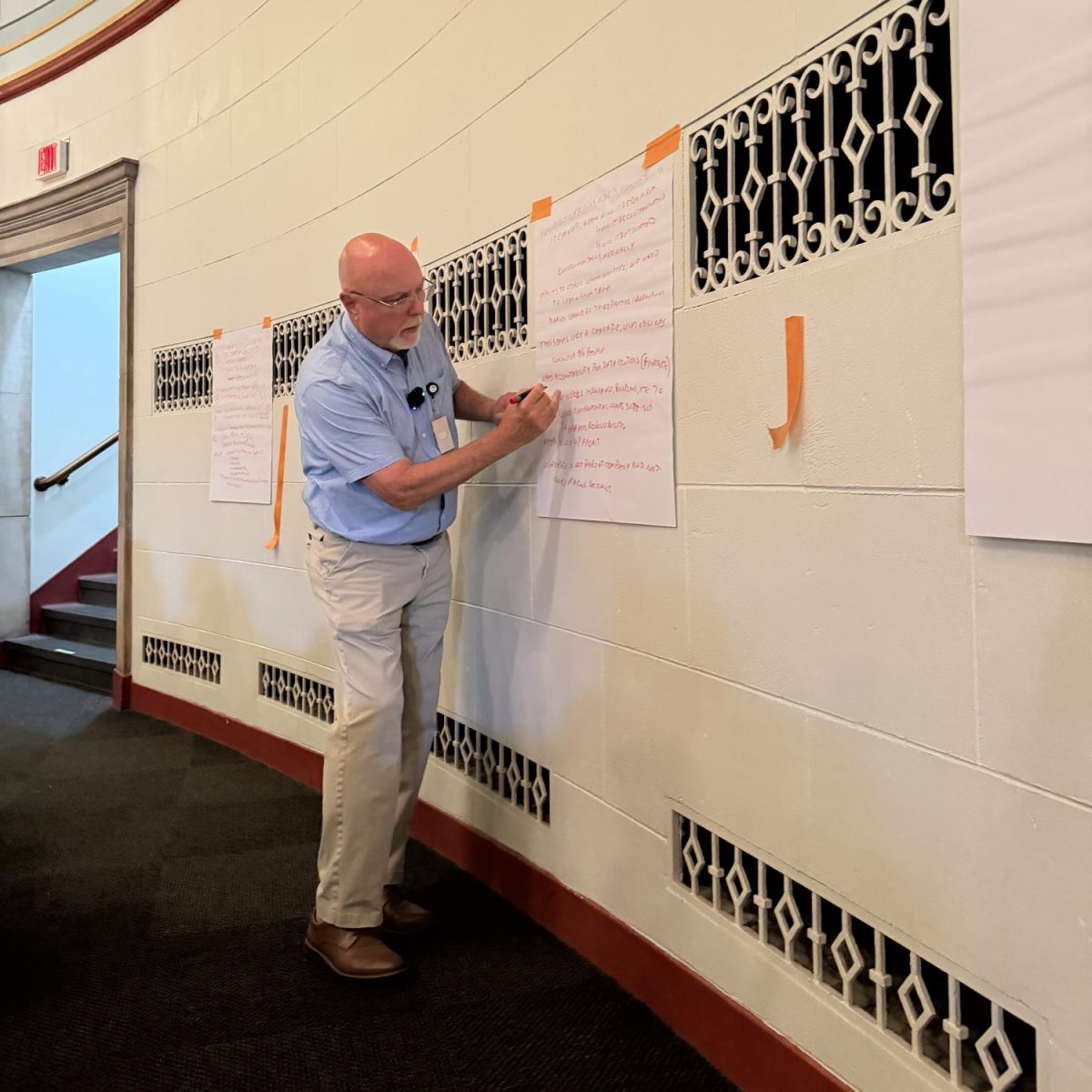
The city handed out forms for visitors to write down their questions, concerns or suggestions and submit them at the end of the listening session.
The session started with a few questions about the data center and where city leaders are getting the majority of their information. Of those who attended the listening session, more than 80% wrote they were not supportive of Lightedge’s proposal while 5% said they were. The rest were undecided.
Lightedge’s proposal: The company wants to build a 100,000-square-foot facility in Ames. It would start by constructing the full building shell and filling it with about 10% of its server capacity. A second phase would bring that to 25% capacity, and a third phase would complete the buildout based on demand. The company expects full buildout to take about 10 years.
Lightedge describes itself as a company with more than 30 years of experience providing secure technology infrastructure. It serves more than 1,400 customers in health care, finance, manufacturing and other industries across Minnesota, Iowa, Nebraska, Missouri and Texas.
Residents: Council should have spoken with public first
A common concern throughout the night was the fact the council spoke to Lightedge before communicating to the public. If it had been the other way around, then the council could have already found answers to the community’s questions.

“It’s like a game of telephone,” Ames resident Emily Golden told the Ames Voice.
Golden said the council could have spoken to the public first so its members could relay their questions to the company.
“The city council asked their questions to Lightedge before they actually came to the people to find out what the questions were,” Golden said. “… It’s like we heard what Lightedge has to say, but Lightedge doesn’t actually have our questions brought back to them.”
It seemed like the council was rushing a conversation that didn’t need to be rushed, Golden said.
“I think that this is something that happens really fast, like unnecessarily fast,” Golden said. “There’s no emergency happening. So, from my perspective, it should be something that they bring to the public first, figure out what the questions actually are, and then bring those questions to Lightedge once they’ve gotten an understanding from the [community].”
Addressing the council’s assumptions about residents
Other residents expressed disappointment toward the city council for making a rushed decision and for assuming the community was misinformed about the Lightedge proposal.
“I think that is a gross miscalculation and misrepresentation of what this data center would actually be outputting when it comes to energy reserves and outputs, what that amount of energy output could do to the environment around Ames and to the health of the people in Ames,” Ames resident Connor Ferguson told the Voice.
There isn’t enough information available to see how the data center would impact the community, Ferguson along with other residents at the listening session said.
“I think that it’s very concerning that we are in a current cultural moment where people are rushing into decision-making when we don’t actually know what the capabilities of these technologies are and what impacts they’re going to have on the world,” Ferguson said.
Another point raised during the session was to put the decision to a community vote rather than to a council vote.
“Once the population is informed, then we, as the people of Ames, can make a decision,” Darian Everding said during one of the small group discussions at the meeting.
Residents seek a moratorium
Residents urged a moratorium be put in place on the data center until the council receives information about the environmental, medical and community impacts it would have on the city. A study should be conducted by a third party that has no ties to the company.
They argued the study could be conducted by university professors whose work focuses on data centers and their environmental impact. Others said specific policies should be in place before the company can use the land.
“A lot of cities create unintended consequences when they move the cart before the horse,” Everding said. “So I’m trying to think of all of the different ways that you can, if you move this proposal forward — that’s coming on the merit of somebody’s marketing team — how you impact the rest of the city and decision-making for the city going forward.”
Several residents asked what consequences the company could face if an accident — say a water leak or noise pollution — occurred and whose responsibility it would be to fix. Many were against the idea of the company only paying a fine.
Putting trust in the company: Doesn’t matter that it’s not AI
While Lightedge representatives answered some of the residents’ questions last Tuesday, there was still doubt about whether the company would follow through on its promises and statements.
“I do not trust this company to do what they claim they’re going to do,” Golden said. “They seem to have an answer to every environmental concern, every question people have about water usage, about power usage, and how it won’t impact anyone at all, and I, to be honest, just don’t believe that.”
Lightedge says the facility would use air-cooled equipment rather than water cooling, which would not place a heavy strain on the city’s water supply. Water that’s used would be circulated in a closed system. Once the system is filled, no additional water would be needed.
Fewer than 10 employees would work on-site regularly, with about 20 people present at any given time.
Mayor asks community to give the council the benefit of the doubt
At the end of the listening session, Mayor John Haila expressed his pride in the community. The people who showed up were of all ages — ranging from high school students to senior citizens.
“I am proud of Ames and how this meeting was conducted tonight,” Haila said. “We had stability and some clapping, but this is a way local government should operate.”
Haila also acknowledged the discourse on social media and urged the community to consider giving the council and city staff the benefit of the doubt. City staff and council members “really care and have the best interests of Ames,” he said.
“I would ask you to consider thinking the best of council, thinking the best of staff — [it’s their] work to try and provide some information,” Haila said. “Think the best of your neighbors and people that may not agree with you.”
What’s next: The city council will revisit the Lightedge proposal on July 14. Questions or concerns can be emailed to [email protected].