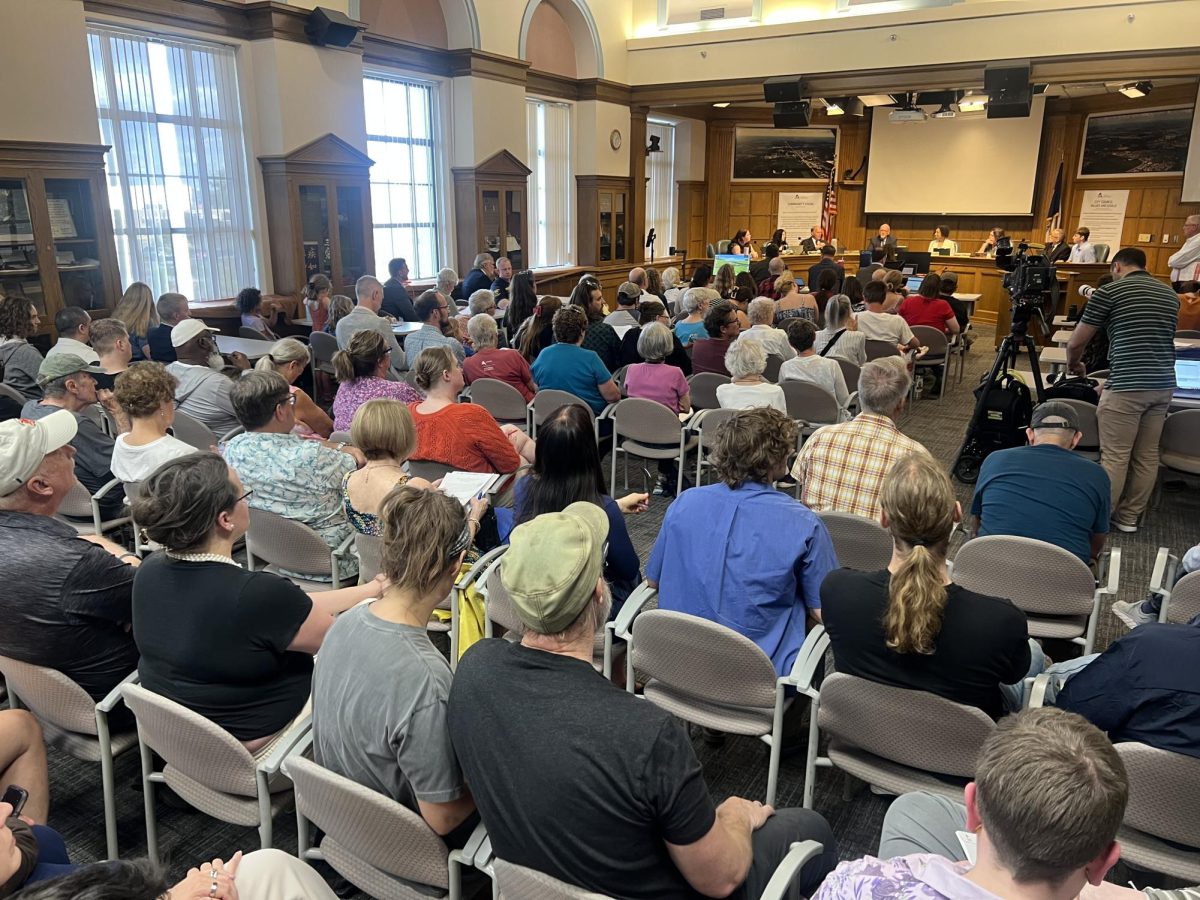
Residents flooded city hall on Tuesday night to hear about a proposed data center in Ames. Many were seated outside the at-capacity council chambers and joined hundreds of at-home viewers who watched the proceedings on a video feed.
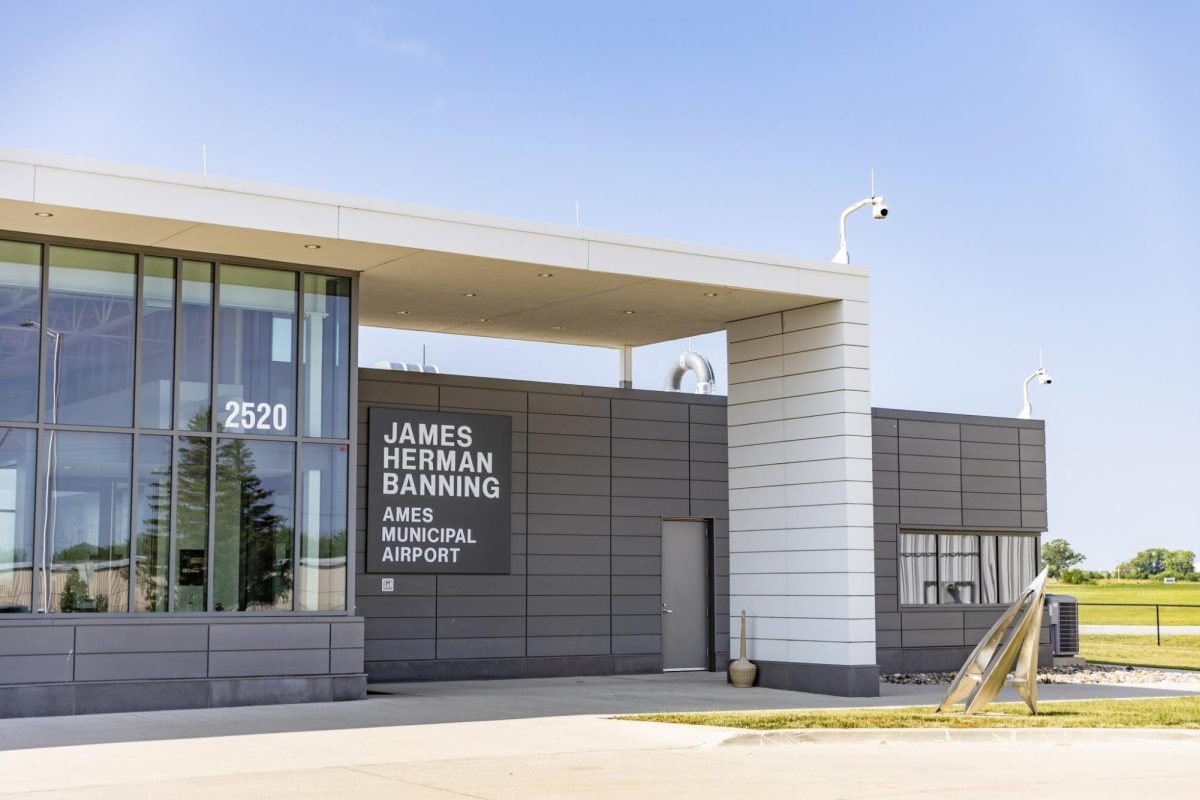
They gathered to hear about Lightedge, a Des Moines technology company that wants to build a large data center on city-owned land near the James Herman Banning Ames Municipal Airport. City leaders are taking a step-by-step approach before deciding whether to say yes.
Lightedge, which stores and manages computer data for businesses across the Midwest, sent a letter to the council in May asking to negotiate a lease for about 11 acres of land on Aviation Way, just west of the Sigler Companies building and is currently farmed.
The council is not ready to make a final decision yet.
Instead, it laid out three steps before moving forward:
- Tuesday’s presentation about the project
- A public listening session on Tuesday evening at city hall where residents can share their thoughts about the proposal
- A legal memo from the city attorney due July 14 explaining what limits the city can place on data centers
Tuesday’s presentation and council questions lasted one hour and 50 minutes.
A data center for businesses, not AI
Lightedge describes itself as a company with more than 30 years of experience providing secure technology infrastructure. It serves more than 1,400 customers in healthcare, finance, manufacturing and other industries across Minnesota, Iowa, Nebraska, Missouri and Texas.
The company wants to build a 100,000-square-foot facility in Ames. It would start by constructing the full building shell and filling it with about 10% of its server capacity. A second phase would bring that to 25% capacity, and a third phase would complete the buildout based on demand. The company expects full buildout to take about 10 years.
Rep. Tim Gartin said he spent hours reading messages from concerned residents.
“I have never seen such a disconnect between what residents think is being considered and what this type of data center would do,” he said.
Company officials said the proposed data center would not be involved with artificial intelligence (AI) servers. Instead, it would house remote servers used by area businesses and industries to run their businesses.
Lightedge says the facility would use air-cooled equipment rather than water cooling, which means it would not put a heavy strain on the city’s water supply. Water that is used would be circulated in a closed system. Once the system is filled, no additional water would be needed.
Fewer than 10 employees would work on-site regularly, with about 20 people present at any given time.
An electricity challenge
City staff identified electricity as the proposal’s biggest hurdle.
The data center would start by drawing three megawatts of power, grow to six megawatts in phase two and eventually demand 25 megawatts at full buildout. That is a significant amount of electricity for the city’s utility to provide.
The area near the proposed site can currently handle only about three megawatts of power with existing equipment. Serving the full project would require extending high-voltage transmission lines and building a new electrical substation.
Staff identified three possible ways to run power to the site:
- Run lines from the east side of the airport along South Duff Avenue, then bury them underground beneath the airport to reach the west side.
- Build a substation on the east side and run smaller underground lines beneath the runways.
- Route lines south of the airport and up South Riverside Road, but that path would cross outside city limits and trigger a lengthy state regulatory review.
Airport site is staff’s pick
City staff said the airport property is the best option among several sites being considered. Staff estimated electrical infrastructure costs at roughly $4 million for phase two and $12 million for phase three at the airport location. Because the lines would run underground on city-owned land, no private easements would be needed and long-term maintenance costs would be lower.
The proposed site is currently being farmed, bringing rental income of $255 a month to the airport. The city estimates a lease agreement with Lightedge would result in rental income of $5,489 a month from the 10.86-acre site. The council aims for the airport to be fully self-funded.
Director of Electric Services Donald Kom said a project as large as this would require up to five years to complete. In response to a question from Mayor John Haila, Kom said the city’s power plant needs to be upgraded with or without a data center in town.
Lightedge would pay up front for electric transmission and distribution infrastructure.
“Because of the way we generate and purchase power, this proposal would not result in brownouts or blackouts,” Haila said.
The company would also reimburse the cost of the new capacity purchased on the grid to pay for the energy it consumes.
“There would be no spike in electric rates because these guys would be paying their own freight,” Gartin said.
The council recently walked away from a proposal to locate a solar farm on airport property. One of the several problems with that proposal was finding enough land suitable for non-aviation uses.
Lightedge is considering two other sites in the city, according to city staff:
- The former Danfoss property at 300 Airport Road would be easier to connect to the electrical grid and would cost less to serve. However, it would not generate any extra revenue for the airport.
- The Dayton small-lot industrial park on Bailey Avenue is considered the most difficult site to provide sufficient electricity, with estimated costs of $8 million for phase two and $20 million for phase three. Serving that site would also require crossing private land outside city limits, again triggering state regulatory approval.
No tax breaks planned
Staff noted that leasing airport land to Lightedge would generate rental income that, under federal rules, must be used to support airport operations. Any money earned from the land use change cannot go into the city’s general fund.
The city would also gain new property tax revenue from the building. Staff confirmed Lightedge has not requested any property tax breaks or economic incentives and said it would not support offering any. That means the school district, Story County and the city would all receive tax revenue from the new facility.
A lease agreement would also give the city legal tools to set limits on the project, including rules about building size, water use and noise. Staff said those protections would not exist if Lightedge built on private property instead.
The council did not vote or take public comments but acknowledged a petition in opposition to the project is circulating in town. Residents will have a chance to share their views at the council’s listening session scheduled for 6 p.m. Tuesday at Ames City Hall, 515 Clark Ave.