A federal grant awarded to CyRide will strengthen its ability to provide reliable transportation to Ames.
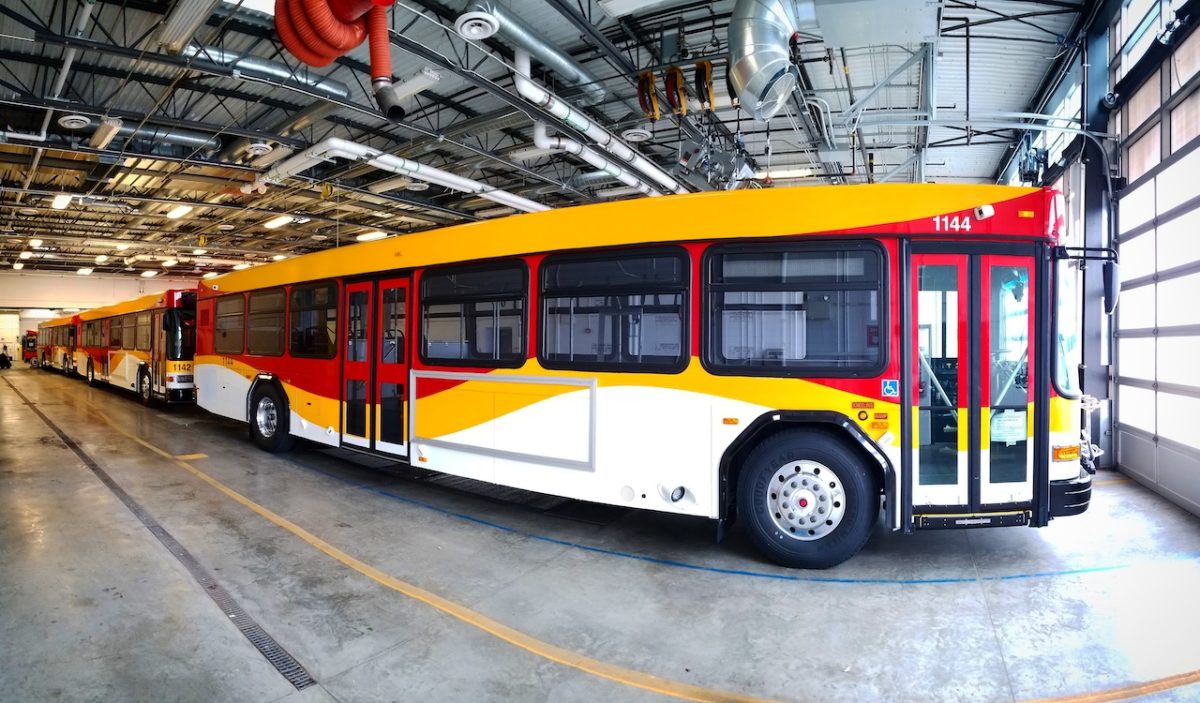
The Federal Transit Administration’s Bus and Bus Facilities Competitive Program awarded a $14.6 million grant to expand CyRide’s administrative, maintenance and bus storage facility. The grant will also help CyRide maintain its sustainability goal by converting 20 buses to 100% biodiesel fuel.
“Investing in the facility now also helps us manage costs in the long term,” Transit Director Barbara Neal said in an email to the Ames Voice. “Having the right space and equipment reduces unexpected maintenance needs and lets us focus our resources on providing strong service on the street.”
The transit system provides nearly five million rides each year across Ames and Iowa State University and currently ranks fourth in the nation for ridership per capita.
CyRide’s ridership remained consistently strong as it’s driven by a blend of students and residents within the Ames community who use the system for daily transportation.
“We serve a community that really uses public transit, and that makes a big difference. Ames is not a large city, but our ridership per capita is among the highest in the country,” Neal said. “People rely on CyRide to get to work, to class and to daily activities, and that strong demand helps us operate an efficient system.”
What will the grant cover?
While the federal Bus and Bus Facilities grant doesn’t cover the entire expansion and fuel conversion, it does fund a significant portion, including:
- Provide indoor storage for the entire fleet
- Add maintenance capacity to serve articulated and clean-fuel vehicles
- Expand training and administrative space to support a workforce, which has grown more than 40% since 2008
- Enhance operational capacity to support long-term growth
“The federal support we were just awarded makes a tremendous difference, and we are very grateful for funding at this level,” Neal said.
The city of Ames, Iowa State and Iowa’s state government will provide a local match.
Project timeline
While the exact timeline isn’t laid out yet, the multi-year project will begin with planning and design work where CyRide finalizes the layout, sequencing and procurement approach. Neal said they will work on the project in phases so CyRide can operate normally throughout construction.
“Projects of this size take several years from start to finish, but phasing the work allows us to keep service reliable while the construction is underway,” Neal said.
The next phase is early site work like utilities, paving and improving traffic flow around the facility — all of which can be done without disrupting daily service, Neal said.
“Once those pieces are in place, we begin the main expansion,” Neal said. “That includes adding more indoor bus storage, expanding our maintenance space and installing the new (biodiesel) underground fuel tank along with the equipment needed for on-site biodiesel blending. These improvements are what allow us to operate more of the fleet on 100% biodiesel throughout the year.”
The final stages of the project will include commissioning the space, testing the new systems, training staff and making sure everything is fully integrated into day-to-day operations.
CyRide’s sustainability efforts continue
A portion of the $14.6 million grant will be used to convert 20 of CyRide’s 89 buses to operate on 100% biodiesel fuel. It also includes the installation of an underground biodiesel fuel tank and on-site blending equipment to support year-round use, according to the city’s news release.
It’s part of the city’s effort in sustainability. CyRide operates its fleet of buses with 2-10% biodiesel in the summer and 2% in the winter. They are also in the final year of a two-year pilot program that allows CyRide’s existing diesel buses to operate on 100% biodiesel by heating and managing the fuel.
This makes it a “practical way to cut emissions without replacing vehicles right away,” Neal said.
“Biodiesel is produced from renewable sources like soybeans, which is a big part of Iowa’s agricultural economy,” Neal said “It also produces fewer particulates than conventional diesel, so it helps improve local air quality.”
CyRide still use the hybrid buses — Cybrids — which account for 17% of the bus fleet. Electric buses are still part of the long term plan for CyRide, Neal said, but they need “major charging infrastructure and power upgrades before we can scale them.”