
Ames is wasting no time in preparing for a curbside recycling program.
Every household would get a 96-gallon recycling cart picked up every other week, city staff recommended to the Ames City Council on Tuesday. The service will likely cost between $6 and $8 per household per month.
The staff provided recommendations based on the results of a city-wide survey. More than 1,500 residents responded to the survey, and 92% said they’d participate in the program.
The recommendation covers all Ames houses and housing structures of four or fewer units.
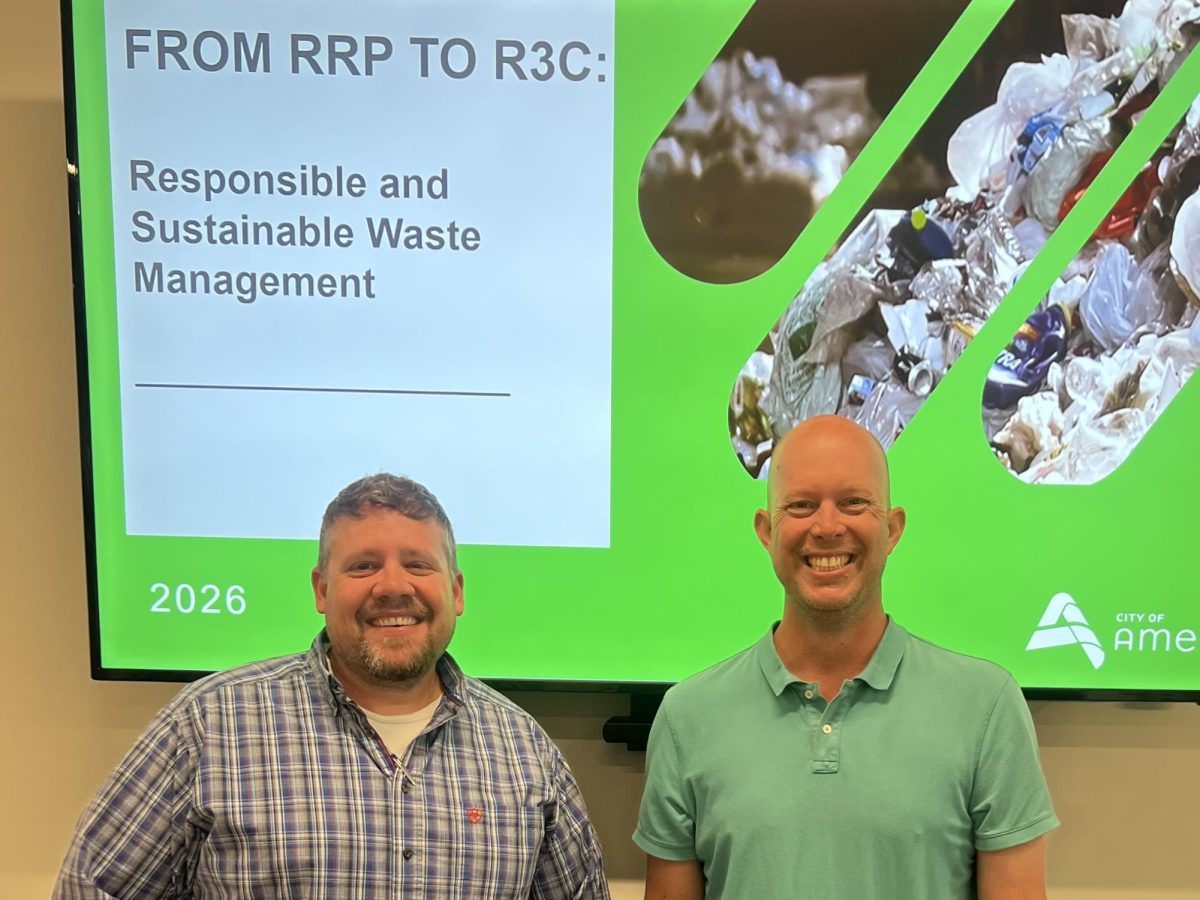
Why recycling now?: Staff told the council that Ames needs a residential curbside recycling program at the Aug. 12 meeting. This came after a June report about plans for a new Resource Recovery and Recycling Campus (R3C), which should begin construction in spring 2026 and operations in 2027.
Recycling matters for both environmental and financial reasons, staff said. It supports the community’s Climate Action Plan goals and costs less than sending trash to landfills in two important ways:
The Iowa Department of Natural Resources charges landfills a fee for every ton of trash they receive. Under the city’s agreement with Carroll County landfill, Ames pays those fees. The more waste the city diverts from landfills through recycling, the lower this per-ton fee becomes.
It costs less to transport recyclable materials to facilities in Des Moines, about 60 miles round trip, compared to hauling trash to Carroll County landfill, about 150 miles round trip. Shorter trips also mean fewer miles driven and lower greenhouse gas emissions.
Historically, Ames diverted significant waste from landfills through its garbage-to-energy process at the Resource Recovery Plant. As the city transitions away from garbage-to-energy, recycling must fill this gap to meet waste diversion requirements.
What residents said: After the August meeting, staff conducted a curbside recycling survey. The survey received 1,543 responses and revealed strong community interest, with 92% of respondents stating they’d participate in a curbside recycling program.
Cost concerns were the biggest barrier (20% of respondents), followed by space for bins (15%) and uncertainties about what can be recycled (8%). Many residents (49%) asked for smaller cart options. Most residents also supported keeping a central drop-off site for recyclables (74% support) and community cardboard sites (71% support).
Five key decisions: Staff identified five topics that need council direction to move forward with the program and made recommendations on each topic. The council approved all five recommendations.
Participation: Research shows that recycling participation varies based on how accessible the program is. Nationwide studies by the Recycling Partnership and Sustainable Packaging Coalition found that 75% of Iowans currently have access to recycling, with 44% through curbside and 31% through drop-off only.
City staff recommended universal-access recycling, where all eligible residents are charged for service and receive a recycling cart automatically. This results in the highest participation – around 75% of households – and the best waste diversion – over 30% of waste tonnage. However, this approach has the highest risk of contamination because some people might put trash in their recycling carts.
The city passed on an opt-in only program and drop-off-sites only plan. The former didn’t have enough of an impact and the latter wouldn’t have achieved meaningful diversion goals. The city also explored the option of a universal charge with opt-in – all residents pay for the service but have to request a cart. Most similar-sized Iowa cities already provide universal curbside recycling access.
Providers: Staff recommended soliciting proposals for a city-wide contract with a single provider. This approach should result in lower fees, consistent service and education messaging, minimal truck traffic, good diversion reporting and control over drop-off locations. However, residents wouldn’t be able to choose their service provider.
The contractor’s services wouldn’t include processing or final disposal of recyclables. Staff would tell the contractor where to deliver materials, but disposal fees would be paid by the city and charged back to residents through monthly billing.
Staff considered requiring existing haulers to offer recycling, which relies on the private market. Nine licensed haulers currently collect trash in Ames, and two already offer residential curbside recycling. That option would require less city involvement but more truck traffic, varying services and little ability for the city to track diversion rates. Some haulers might not have the resources to offer curbside recycling services and could push back against the requirement.
Cart ownership: The city needs approximately 14,500 recycling carts for community-wide curbside recycling.
Staff recommended a city-owned, contractor-procured option, where a contractor provides city-branded carts, which are paid off over five years. Afterward, the city owns the carts, which should last 15 to 20 years. If the city hired a new contractor in the future, the carts would remain in use.
While the city might save some money by obtaining the carts directly, there are benefits to not coordinating between cart delivery and ensuring the carts meet industry standards that work with the contractor’s equipment. This approach lets the contractor use its industry contacts and ensures the carts will be delivered and work properly the day the program begins.
Service frequency: City staff recommended a biweekly service for the recycling program. In an every-other-week program, customers who generate excess recyclables could request an additional bin for a charge, but weekly pickup wouldn’t be available as an option.
Biweekly service creates higher program efficiency through fuller bins and fewer trips. According to the Environmental Protection Agency, collection costs for biweekly services are 20% to 40% lower than weekly collection. Many communities that switched from weekly to biweekly schedules haven’t seen significant decreases in participation or diversion rates.
In the city’s survey, 72% said biweekly service would meet their needs while 8% preferred more frequent service.
Cart size: Based on survey results, city staff recommended using 96-gallon carts – 63% stated they’d be adequate. However, 34% indicated the cart would be too large.
In a separate question, 49% of respondents preferred an option for a smaller recycling cart.
A uniform, large cart size of 96 gallons would simplify cart procurement and inventory. With the space – a 96-gallon cart is 29 inches by 33 inches by 45 inches – and the ability to fit larger items such as cardboard, large bins may encourage more recycling and prepare the program to accept more materials in the future. However, for smaller households that generate minimal waste, a 96-gallon cart could be larger than necessary.
Once the program is running, staff can evaluate whether residents want additional cart sizes and look for ways to accommodate those requests.
Cost: The costs of a curbside recycling program consist of equipment costs (carts), collection contract costs (fuel, trucks, labor), disposal costs (the per-ton tipping fees), and administrative costs (billing, public information, etc.). Compared to similar programs in other communities, staff estimates that a monthly household fee is likely to be between $6 and $8.
While the equipment and collection contract costs won’t be known until proposals are solicited, staff expects the first year will cost more than later years because the hauler will be required to haul materials directly to Des Moines until the R3C facility opens.
A more specific financial analysis can be presented to the council when a hauler contract is ready for consideration.
Next steps: The council instructed the staff to prepare a request for proposal based on the staff recommendations. The proposal would outline expectations around recycling pickup, notification to customers, customer service regarding missed pickup or contaminated recyclable materials, and other standards to ensure the program’s success.
The recycling program could start six to nine months after the request for proposal is issued, ideally around July 1.
An ordinance would ultimately need to be considered to establish the program, set recycling standards and adopt fees.
Multifamily recycling pilot: Separate from the residential curbside program, city staff believes it would be valuable to seek partners to advance understanding of multifamily recycling. The partnership would involve a financial incentive in the form of a cost-share program to one or more interested multifamily properties to pilot recycling.
The goals of the pilot program would be to identify challenges and best practices around multifamily recycling, including infrastructure and space, contamination, awareness, education and costs.
The results of this pilot would be used to further engage with and expand multifamily recycling in Ames. The council approved $20,000 from sustainability funding in the Council Priorities Fund for the pilot program.