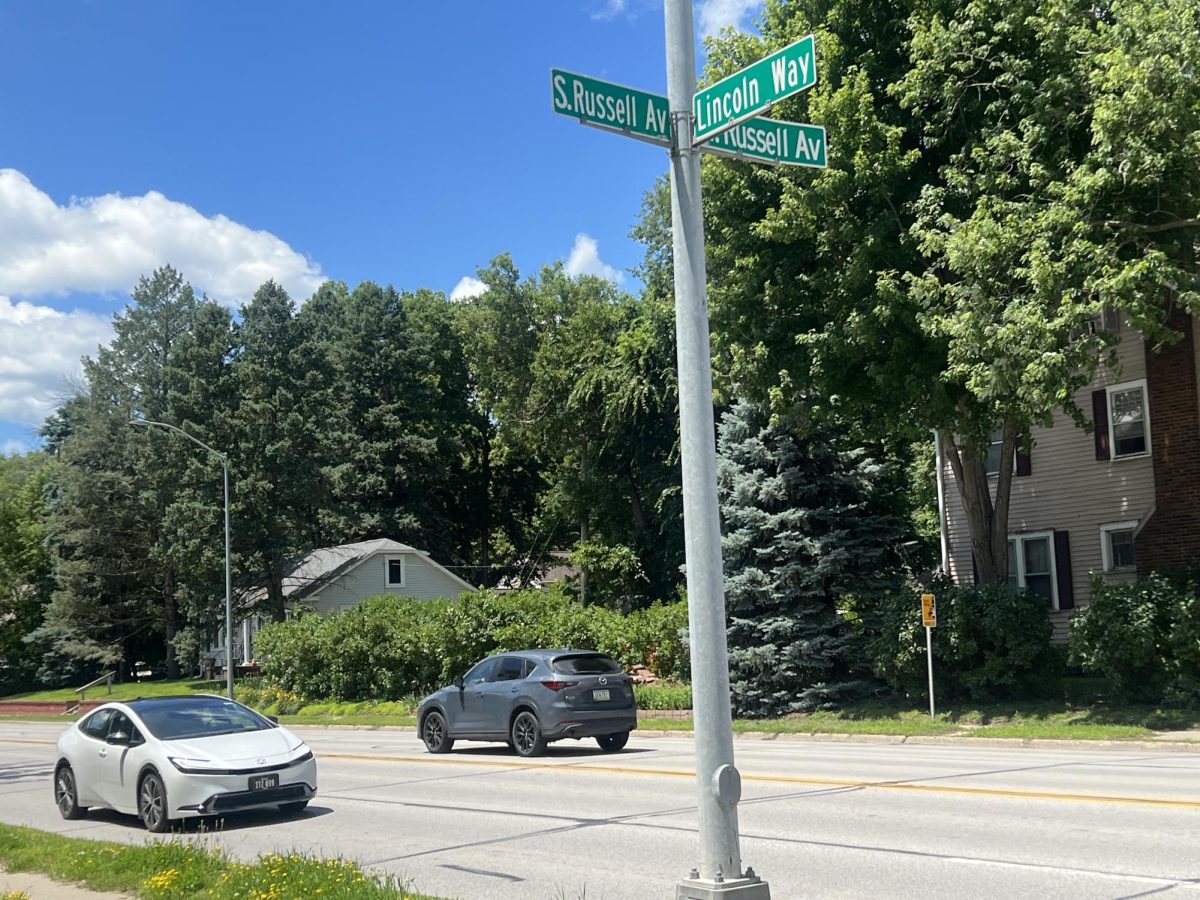
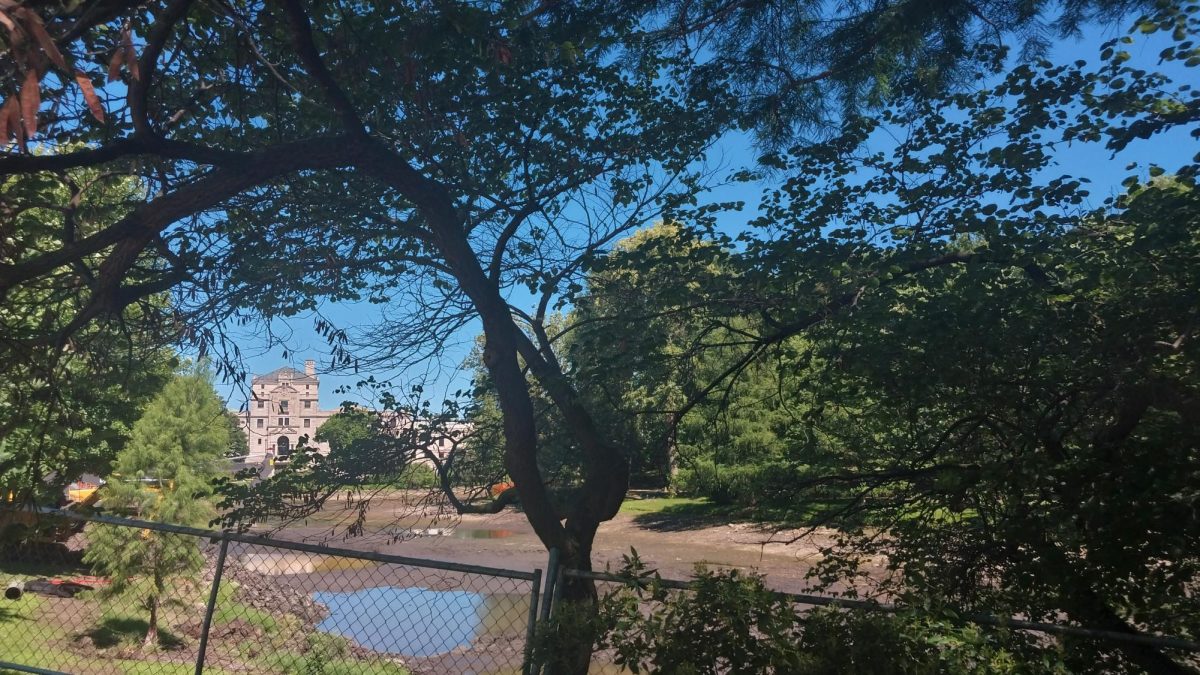
Iowa State University’s Lake Laverne, which sits on the south side of campus along Lincoln Way, is currently blocked off by metal fences surrounding the area and is void of water.
This summer, the lake is under construction for a two-phase renovation. Construction started in late May, with completion set for fall or winter of 2027.
The project’s main goal is to improve the depth and volume of the lake to better keep the water healthy. That starts with dredging the lake, said Chris Strawhacker, senior vice president for operations and finance at Iowa State.
“The lake hasn’t been dredged in over 30 years. It has accumulated high nutrient values in the lake, which is fairly common for lakes in Iowa, but it’s so shallow and so high in nutrients that we have algae problems from aquatic plants that really impact the aesthetic,” Strawhacker said.
The renovation features a pedestrian bridge, an amphitheater and plans for an outdoor classroom.
With a budget of under $5.1 million, approved by the Iowa Board of Regents, the project is being funded by the university and donors. The first phase of the project includes dredging the lake, stabilizing the shoreline, building a plaza on the southeast shoreline and adding additional seating along the path.
Strawhacker said the project started as a dredging project, but after working with donors and gaining insights, there was interest in a grander project.
“We started to think about how we could bring people back to the lake as a destination on campus. When we are done, we will have a transformed, reimagined Lake Laverne, with activities and areas for people to come down and enjoy the area of the lake more,” Strawhacker said.

Phase two of the project includes construction on the west end. There will be reconstruction of additional paths and building a bridge and amphitheater, which will feature a concrete stage as well as final landscaping work. The swans will be reintroduced to the lake after completion, too.
When designing this project, the university sent out surveys to students about their experience with the lake. Strawhacker said many responses had an appreciation for the lake in passing by for class, but rarely was time spent at the lake.
“When the project is finished, we really want people to be able to say they have a memory at the lake, that there was something they enjoyed happening or doing at the lake. It’s one of those places on campus that people remember when they leave and come back,” Strawhacker said.