Mary Greeley Medical Center has new technology to help detect lung cancer and provide an earlier diagnosis, which can save lives.
It’s called navigational bronchoscopy (NB). It uses computer technology to obtain a biopsy of lung lesions, or nodules — which are spots found on X-rays or scans that could be cancer, infection or other tissue. NB can work even in deep areas of the lungs that were previously difficult to biopsy.
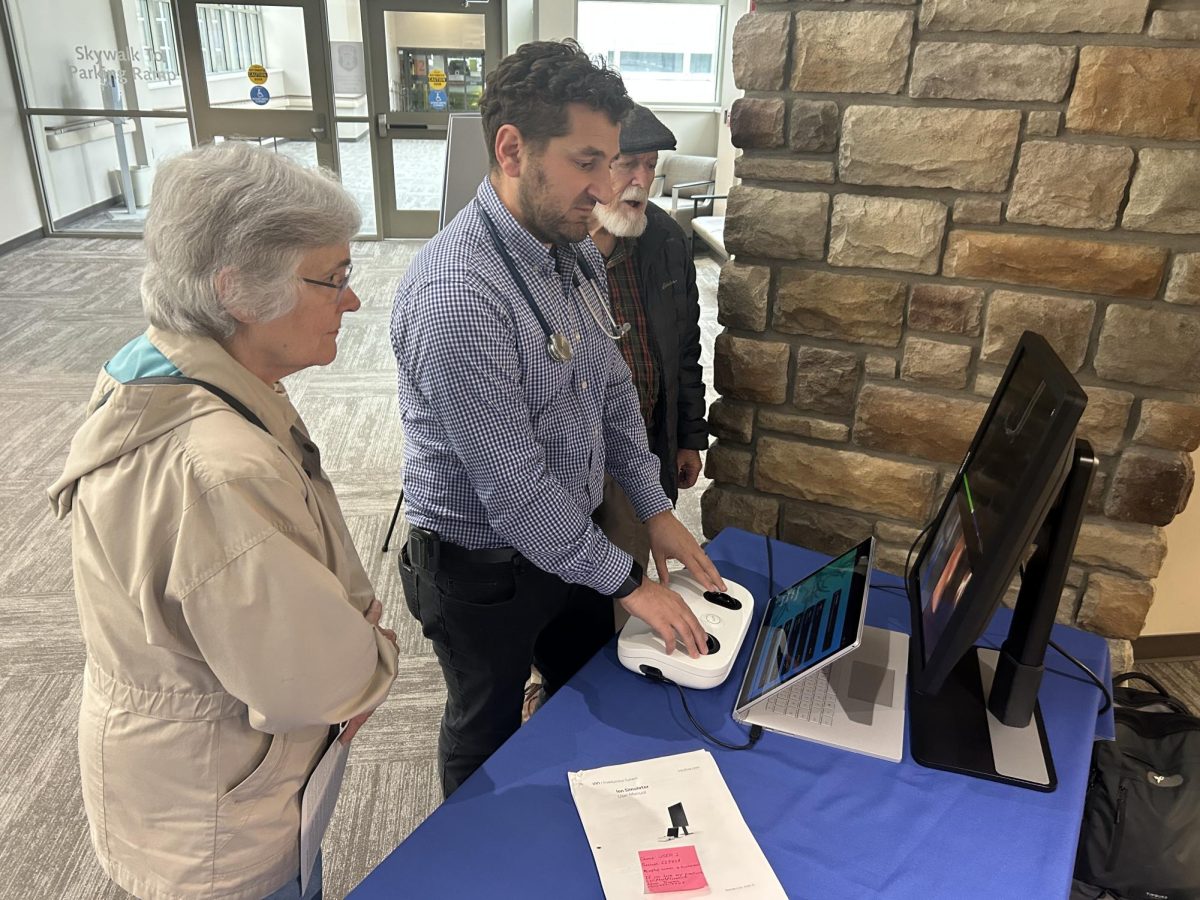
The Ion Robotic Bronchoscopy platform used by Mary Greeley includes a robotic catheter which is only 3.5 millimeters in diameter (less than 1/7th of an inch). This can biopsy nodules as small as 5 millimeters — or 1/5th of an inch.
Typically, if a nodule is spotted on a scan, there would be a follow up in a few months or doctors would order a biopsy.
The new tests can help detect cancer early, which is essential for improved treatment according to Dr. Tamim Mahayni, a McFarland Clinic pulmonologist.
“What is most important is to raise awareness of newer technology and screening to reduce these lung cancer deaths by early detection and treatment,” Mahayni said during a recent webinar.
Mary Greeley has had the Ion device since June and its use was demonstrated to the public in November. In that timeframe, the hospital used it for 90 patients.
“Early detection saves lives. There have been more advances in early detection over the last 15 years than in the past for a long time.” Mahayni said. “Lung cancer has been difficult to detect early, because, early on, there are no symptoms. No physical exam, lab test or regular chest X-rays can detect lung cancer early because the tumor may be too small. This is why screening is so important.”

Iowa has the second highest rate of cancer in the United States, Mahayni said.
“Lung cancer has, by far, the highest death rate at 125,000 lung cancer deaths in America per year,” Mahayni said.
Three other common cancers — colon, breast and prostate — account for 131,000 total deaths combined.
Prior to the NB technology, after using low dose X-ray CT scanning to find lung nodules, biopsies were done to establish whether the lesion was cancer. The previous method to diagnose cancer vs. an infection, was to biopsy the nodule using either a large bronchoscope or a needle through the chest wall.
The previous methods of biopsies had complications — unwanted air or bleeding inside the chest — in 30% of cases, said Whitney Garwood, director of radiology at Mary Greeley.
This new technique “has virtually no complications now,” Garwood said, after more than 90 procedures done by Mahayni and Dr. Taher Sabobeh, also a McFarland Clinic pulmonologist.
CT scans with low dose radiation find very small, early cancerous lesions
Over the past 10-12 years there has been lung cancer screening offered by using a CT scanner with low dose X-rays to identify small lesions called nodules in the lung. This CT scan screening, which takes three to 10 minutes, is usually covered by Medicare or private insurance companies, if certain criteria are met. The criteria are 50- to 80-year-old smokers or ex-smokers (who quit in the last 15 years), with a history of heavy smoking.
Only 18% of smokers or ex-smokers who are eligible had this CT screening performed — and in Iowa the numbers are even less, probably in large part due to lack of awareness.
Saving lives — with 20% less mortality
Mahayni and Sabobeh are trying to raise awareness — not only for the CT screening but the new device to help diagnose lung cancer earlier. Studies have shown that earlier diagnosis saves lives, with a mortality rate that is 20% less for patients who get screened and now have better technology to help them.
For more details on lung cancer screening and treatment, watch McFarland Clinic’s Lung Cancer Screening webinar here or read more about navigational bronchoscopy at Mary Greeley here.